Trending

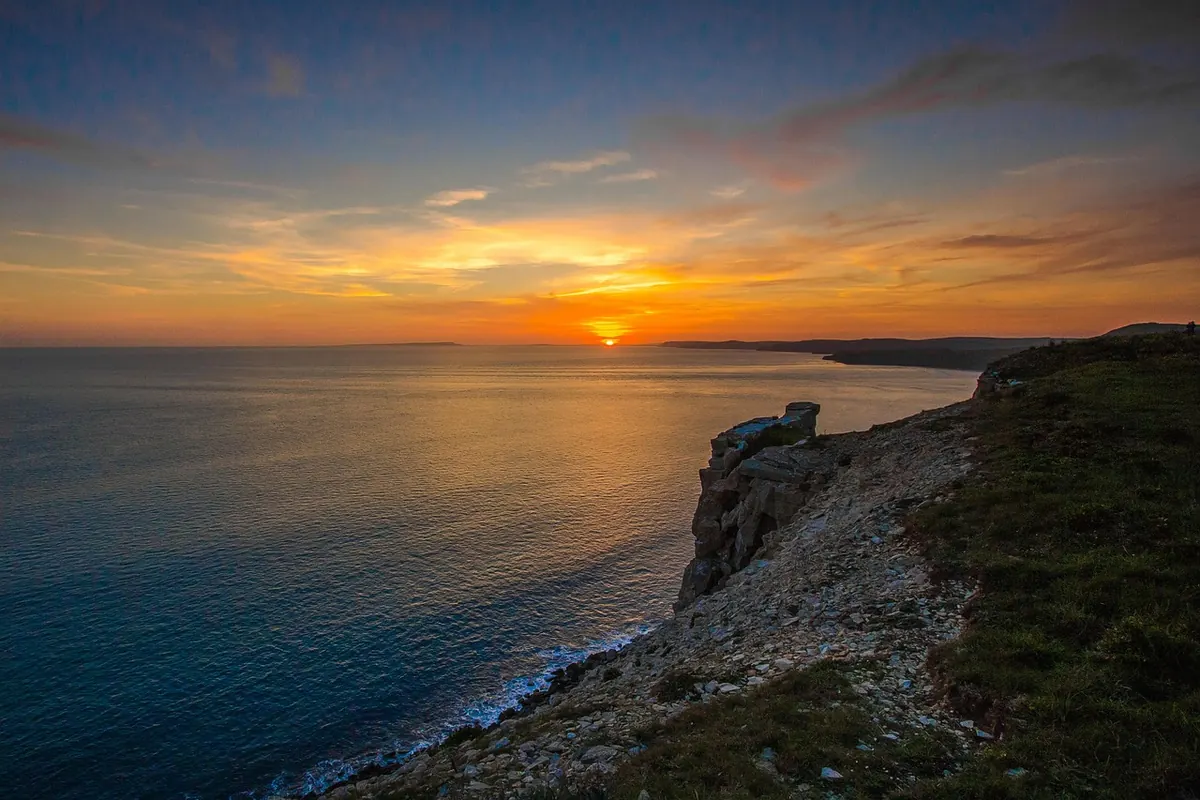
The alarm goes off at a ridiculous hour, the flask is filled, and the lane down to the car park is empty. That is dawn in Cornwall at its best — and the photographs you bring home are decided long before you press the shutter. Coastal sunrise work here comes down to three things: which way you are facing, what the tide and weather are doing, and being on location early enough. Get those right and a modest camera will do the rest.
Cornwall's coastline faces in almost every direction, and sunrise is a directional business. On the south coast — Whitsand Bay, Kingsand, Marazion looking east towards the Lizard — the sun lifts out of the sea, giving you colour on the water and a clean horizon. On the north coast the sun rises behind you, which is no disadvantage at all: at Godrevy, Porthtowan and Trevose, low light rakes across cliffs, surf and wet sand, and the drama sits in the landscape rather than the sky.
East-facing headlands such as Rame Head, Dodman Point and the Roseland give you both, with a seaward sunrise and something solid for the foreground. A sun-position app will tell you where the sun breaks the horizon on your chosen morning; a tide table from a harbour office or the coastguard will tell you whether you can stand there. Check both the night before, not in the car park.
It also pays to know what the weather is likely to do. A clear forecast sounds ideal, but a sky with broken cloud almost always beats it: high cloud catches the first light and turns pink and gold, while a band of cloud sitting right on the horizon can smother the sun entirely for the first twenty minutes. Sea mist is another Cornish speciality — on still, warm mornings it pools in the valleys and along the sand, softening the light and giving you something far more interesting than a plain blue sky.
Aim to be in position at least 45 minutes before sunrise, longer if the walk in is rough or unlit. The blue hour holds soft colour and turns the sea to brushed metal, and it gives you time to set up, focus and settle without panicking. Many coastal mornings peak in the ten minutes before the sun appears — not after it.
Once the sun clears the horizon the contrast turns brutal and most photographers pack up. Don't. Stay half an hour and wait for the light to swing onto the cliffs, when warm colour creeps over grey rock and the beach starts to glow. The best frame of the morning is often the one everyone else has already missed because they were walking back to the car. Use that time to work the scene properly: move ten paces left, get lower, try a vertical, and shoot into the light as well as away from it.
You do not need exotic gear, but you do need to think about exposure before the light gets difficult. A few starting points will get you close, and you can refine from there.
Two small habits make a big difference. First, switch off image stabilisation when the camera is on a tripod — it can hunt and cause blur. Second, focus manually on a distant headland or set focus to the hyperfocal distance, then tape the ring in place so you cannot knock it in the dark.
Spectacular light is not a composition. A frame full of pink sky and nothing else becomes boring quickly, so build the picture around something. Look for a foreground with texture — wet sand, dark boulders, kelp, rock pools, a line of footprints — and get close to it so it fills the lower third of the frame and anchors the eye.
Look for leading lines too. Groynes, harbour walls, a path curling over a headland, the edge of an incoming wave: anything that pulls the viewer from the bottom of the frame towards the light. Placing the horizon on a third rather than the middle usually feels better, though a high horizon with a big dramatic sky can be worth the rule-break.
Try placing something in the scene for scale — a lone figure with a tripod, a moored boat, a small cottage on the headland. Scale is what turns a pleasant coastal view into a photograph that feels like a place. Vary your focal length as well: a wide lens captures the entire bay, but a longer lens compresses distant headlands in layers of mist and can be even more atmospheric. And don’t forget to turn around. The light behind you, falling across cliffs or buildings, is often stronger than the sunrise itself — photographers call it the “second sunrise,” and it is regularly the best shot of the morning.
No photograph is worth a hospital trip, and coastal Cornwall deserves respect. The tide moves faster than most people expect, especially around headlands and across the flat sand at low-water marks. Getting cut off on a rising tide is one of the most common incidents on this coast. Know the tide times and heights for that day, not yesterday, and always identify an escape route above the water before you walk out onto rocks or sand.
A torch on your head is worth more than any lens in the bag at 4am, and a slow walk on wet rock is better than a fast one.
Get up early, stand in the right place at the right state of tide, and let the light do the heavy lifting. Everything else is just refinement.
Dawn on the Cornish coast rewards patience more than equipment. Check the sun and the tide the night before, arrive while it is still dark, keep shooting long after the sun has cleared the horizon, and put something meaningful in front of that beautiful sky. Do that, and the alarm will feel like a bargain.
Photo: diego_torres / Pixabay